Thursday, April 7, 2011

Hi ho hi ho its off to smellville we go........

Hi ho hi ho off to smellville we go......If you can take even a smidge of this information and apply this to your consumptive life a whole new world will unfold. Respect your senses and in return they will guide you right.....A fart will still be a fart but a peach may take on a new meaning.. 
Wine tasting can be an occasional pleasant past time or a time-and-resource-consuming passion. It can be conducted casually or formally,stiff or loosely. No matter what level of orientation or dedication is involved, some basic background knowledge and a logical approach can greatly increase individual enjoyment and satisfaction. Most wine drinkers cheat themselves by not knowing how to taste; many talk the talk but fail to walk the walk, so a lot of ordinary-tasting wines gets sold at extraordinary prices.
Wine tasting is actually a complex proposition involving much more than simply sipping some fermented grape juice. There are many variable factors that affect an individuals perception of flavor in wine. There are chemical, physical, mechanical, physiological, and psychological variables we must respect to get the full appreciation of the said beverage or food.
The type and quality of the wine itself is only one aspect of tasting. Others are the size and shape of the wine glass... the individuals impartial physiological ability to smell and taste, as well as his individual flavor preferences... the temperature of not only the beverage itself, but also the ambient temperature and humidity of the tasting site... mental condition, how hungry, happy,sad,grumpy, tired, and attentive the taster is can also affect relative judgment, as well as any preconceived notions and other psychological factors.
And yet of all of our senses,taste with smell,such as nature has created it,remains the one which on the whole gives us the maximum delight.
1. pleasure of eating and drinking is the only one, which enjoyed in moderation is not followed by weariness.
2.Because it is of all times all ages and in all conditions.
3.Because it happens of necessity at least once a day and may with out inconvenience be repeated twice,or three times within the same space of time.
4.Because it can be enjoyed in company with all other pleasures,and can even console us for their absence.
5.Because the impression which it is receives are at once more durable and more dependant on our will.
6.When we eat and drink ,we experience an indefinable and particular sensation of well being.


The FOUR ELEMENTS of FLAVOR

To understand these variables, let's first look at the phenomenon of TASTE from a physiological standpoint. Flavor, although it may have slightly differing meanings, depending upon who is using the term, always refers to food. A food chemist may use "flavor" only to refer to aroma, while a chef is likely to include taste, texture, temperature, appearance, and arrangement in his context. The International Organization for Standardization (ISO) defines flavor as:
"Complex combination of the olfactory, gustatory and trigeminal sensations perceived during tasting. The flavour may be influenced by tactile, thermal, painful and/or kinaesthesiceffects."

While the senses of smell and taste are truly most important, flavor is not an experience limited to these, but a combination of experiences from the senses of smell, taste, touch, and, less obviously, sight
.
ONE - SMELL: Acute, Ancient and Fragile

The nose can sometimes even beat the eyes in the race for setting up the tasting expectations. An aroma can carry from one room to another, beyond the line of sight. Of the five senses, smell is the most acute, approximately 1,000 times more sensitive than the sense of taste. As a result, what is termed flavor is influenced by roughly 75% smell (olfaction) and 25% taste (gustation) in healthy individuals. Ever notice how foods seem to taste bland or less distinctive when the nose is blocked by a cold?Us humans in societies with markets to tell us when our food will spoil with use by dates our sense of smell got places on the back burner of importance when dealing with basic survival. Doing so we also lost the gift of a well developed olfactory nervous system. Have no fear you can exercise said "muscle"and flex the new found strength in your nose.
Smell and taste are the chemical senses because their receptors are stimulated by chemical molecules, rather than by energy from light, pressure, or sound, trippy huh?. As little as one molecule in a million may be detected by the nose, but it takes a minimum of one part per thousand to stimulate the tongue. As sensitive and accurate as this organ is, relatively few people ever realize its potential for sensory enjoyment by learning how it works and the language of smells. Professional food and wine tasters and perfumers use analogies to common experience to describe aromas. Experts are those that practice and use their sense of smell most frequently.One of my favorite analogies I use to describe a Santa Cruz Mountain Cab is as follows....I'm in fourth grade with my lips covered in cherry cola lip Smacker while I'm in the back of the class sharpening my lead pencil after a long sweaty game of soccer on a hot day. Whaaaaa. OK lets break it down. Cabernet has dark fruit notes and some times cola notes with a flinty finish(pencil lead and lip smacker)there is also mineral notes that wafts in a well aired Cab that would be me the sweaty kid. After a good soccer game I'm gonna smell sod and dirt just like the earth qualities in the Cab. Don't know why but my memory analogies always are childhood memories. Paging Dr. Freud....OK back to the factoids.

The odor vapor must contact receptors which cover the organs of smell, a pair of olfactory membranes. Located deep in each uppermost nasal cavity, they are brownish-yellow, roughly the size of a postage stamp, about two centimeters thick and covered in a thin layer of mucous, which the molecules must penetrate. There are 200 distinct kinds of nasal receptors. They function using 50 million olfactory neurons, each with cilia that extend into and through the mucous. On the cilia are the receptors that capture the scent molecules, signaling the neurons to send the scent message to the brain for interpretation.
The sense of smell is ancient and primal, one of the earliest senses evolved, for locating food, warning of danger, and regulating sexual behavior. Unique among the senses, the scent message passes directly through the limbic system, the emotional center of the brain, on its way to conscious identification in the cortex. Reaction to certain smells may be instinctive; identification of those smells requires a certain amount of experience and training.

Fatigue and Adaptation

While smell is the most easily stimulated of the human senses, it is also the most fragile. Most of us have experienced detecting the aroma of cooking, maybe even from outside the house. In pursuit, we trace it to the kitchen where it becomes stronger. After standing there for a few minutes, however, the cooking odors may no longer be noticeable. This fatigue of the sense of smell is part of sensory adaptation: the self-adjustment to a constant level of stimulus in an environment, so that the individual retains sensitivity to changes. This adaptation also occurs for the sense of sight in a darkened theater or hearing in a noisy city.
Some adaptation is short-term; recovery and return to the degree of sensitivity prior to exposure may only take a few minutes. Research has also demonstrated that constant environmental odor exposure can cause adaptation that lasts for days or weeks, even after removal of the odor source.
Ever notice a perfume counter with all those viles jars and bottles full of adapted molecules ready to overwhelm your system. There are little bowls of coffee beans to bring your senses back to zero when the over stimulation has rendered you useless to choose your scent purchase. Short lived solution best to leave and rest your nose and try more another day. The shop doesn't want to lose your sale so gives you a false sense of olfactory security.......Heap of beans I tell ya.
There is a great variation between individuals in the elements to which they are sensitive. A person's absolute threshold is the smallest amount of stimulus required to produce a sensation. Once that threshold is reached, unless trained, the individual can only recognize and unconsciously catalog the smell as either "familiar" or "new". Scientists have proven that the nose can detect and distinguish between thousands of different smells, depending upon individual aptitude and training.You always can recognize the smell of your spouses farts...
Even individuals lacking the ability to smell specific odors (1anosmia) can often be induced to learn them by repeated exposure. Very little research has been conducted to either explain or rectify serious sensory problems of smell or taste, which can arise from congenital defect, illness, or injury, and may effect one of every 150 human beings. When I was young my Mom had a girlfriend who wasn't fond of her husband. He had due to illness or injury had lost his sense of smell. So moms girlfriend realised she didn't need to create elaborate meals for him and on occasion when he pissed her off a can of ALPO was cooked up as a "tasty stew"....

Aroma Theory not therapy

To date, scientists have cataloged over 17,000 different smells. About 10,000 can be distinguished by humans, although no one knows just how this ability works. In the early 1900s, a researcher named Henning suggested there are really only six categories of smells, combinations of which account for all the detectable odors and aromas.
Henning arrayed these categories into a three-dimensional prismatic map whereon, his theory suggests, all smells could be plotted to some point on one of the surfaces. For example, it should be possible for something to smell fruity, putrid, resinous, and burned, but impossible to have a smell that is putrid, spicy, and resinous. The combinations are interesting to plot and contemplate.
The chemical make-up of wine includes many trace elements that contribute to the combination of smells. Some of these same elements are also found, frequently in higher concentrations, in other familiar foods, spices, flowers, etc. Consequently, wine smells may often bring to mind these other familiar things, albeit with more subtlety and much less obvious or instant recognizably. With training, concentration, and practice, nearly anyone can learn to dissect and describe these elements of complexity.
TWO - TASTE: (Mid century or post modern is the question)Categorization and Individual Sensitivity

While there may be a vast array of aroma categories, generally only four tastes have historically been considered: bitter, salty, sour, and sweet. There really is no precise definition of "basic taste"; these four only differentiate and describe common taste sensations. Bitter tastes come from alkaloids, such as contained in coffee and quinine (tonic water). Salty tastes, by far the most common in prepared foods, come from sodium chloride (table salt), sodium nitrite (especially in smoked meats or fish), sodium bicarbonate (especially in baked goods, canned foods), and sodium benzoate (especially in soft drinks and packaged beverages, jellies and preserves, margarine and fast-food burgers). Sour tastes come from acids (citric in oranges, grapefruit, etc., malic in apples, pears, lactic in dairy products). Sweet comes from sugars, primarily sucrose in the American diet, although there are many others (fructose, glucose, lactose, etc.).
Taste has historically been one of the least understood sensory mechanisms. Tastes are sensed by nerve receptors called buds and there are about 9,000 of them on the average tongue. Misinterpretations of research conducted in the late 1800s, led to "tongue maps" that suggested that the basic tastes are sensed primarily by specific areas, such as the tip or center.
Although taste buds were noted to be of different sizes and shapes, depending upon their location, subsequent investigation proved that all of them contain the same kinds of taste receptor cells (papillae) that supply the sensations of taste. The entire top surface of the tongue can sense all of the various tastes.
Combinations of basic tastes, along with the accompanying various aromas, account for different flavors. Taste compounds have smaller molecules than those of odors and, unlike odors, must be water-soluble (hydrophyllic) to cause sensation.
Sensitivity to specific tastes varies considerably with individuals. It is possible in fact to be taste-blind. The test uses a chemical called phenylthiocarbamide, which tastes extremely bitter to some persons and quite bland to others. Some research has suggested that there is higher alcoholism incidence among the genetically taste-blind.
Eastern Influence

Additional theories of taste perception come into Western consciousness from Eastern thought. Asians generally add "hot" (the capiscum or capsaicin taste of peppers; see chemesthesis below) to the four basic tastes. At the beginning of the 1900s, Japanese scientist Kikunae Ikeda identified this sensation as more complex and variable than merely hot. He isolated one element that causes this taste in meat, milk, mushrooms, and seaweed broth as the amino acid glutamate and called the sensation "umami."
Rather than a specific taste, umami is best described as a distinctive quality or completeness of flavor. The nearest English equivalent would be "savory" or "delicious." Oriental food often gets umami, its "complete" flavor, by the addition of monosodium glutamate (MSG).
The scientific journal Nature published an article in the Spring of 2002, that American scientists Charles Zuker and Nick Ryber have identified a taste receptor for amino acids, supporting the idea of Umami. Wine typically contains from one to four grams of amino acids per liter. While still controversial, there are ongoing studies of umami and it is an emerging consideration in food and wine circles.
THREE - FEELING:  (not the song from the 70s)Texture, Body, Tannin, Alcohol and Temperature
                                                                                                          

The sense of touch figures in the overall flavor impression by conveying temperature, texture and pressure, the feeling differences that exist between cold iced tea and hot coffee, between plain fruit punch and carbonated soda, between filtered and unfiltered apple juice, between smooth pudding and crunchy cookies, or between the burn of jalapeño or the cool of menthol. These sensations of touch, irritation, or thermal differences are called chemesthesis and may be experienced in the eyes, mouth, nose, or throat. Much of the touch information of flavor is conveyed to the brain through the trigeminal nerve.
The body of a wine is felt as light or heavy, thin or full, rich or crisp. Body is one of the most often misunderstood components of wine. The description "full bodied" is frequently applied to wines that are high in either alcohol or tannin or in both, without the actual texture and weight of the wine being "full" at all. Body should be thought of as the relative "thickness" or viscosity of the wine.
One of the most prominent elements of wine "flavor" is tannin, more a sensation of touch rather than taste. It is also a significant flavor component of tea, chocolate, soy, pecans, walnuts, and the skins and seeds of many fruits, other than grapes, such as blueberries, dates, kiwi, peaches, persimmons, pomegranates, raspberries and figs. Tannin leaves a puckery, astringent feeling on the tongue, gums, and cheeks and can sometimes also taste bitter. Wine tannins come primarily from grape skins and oak barrels (see Red, Red Wine on the "Winemaking" page) and vary in strength and character. In the mouth, tannins can feel fine, round, and smooth or gritty, coarse, and angular. Tannins are one of the few flavor elements in wine that cannot be smelled.
Alcohol also is mainly experienced as an irritation of the touch sense. When the proportion is too high for the other flavor elements, alcohol may give a "burning" sensation in the nose as well as a "hot" feeling in the back of the throat or the roof of the mouth.
Wine served cold gives a taste impression that is less sweet and more acid and astringent than the same wine at a warmer temperature. This is one reason to serve fruity wines chilled, while dry, astringent ones are best near or just below "room" temperature.
The phenomenons of fatigue and adaption discussed earlier regarding smell are also considerations with taste. Astringency and bitterness require up to ninety seconds recovery in order not to influence the flavor of the next wine. This can be a very long time between tastes. A good swallow of water or bite of bread helps. Sugar also takes a while to fade from the tongue. Chocolate, which combines astringency, bitterness and sweetness, has an extremely long aftertaste, can foul the palate for wine evaluation, and is not recommended within three hours prior to serious tasting. Cheese also clouds the ability to judge wine; as wise old French wine merchants say, "Achetez avec l'eau, vendez avec le fromage" (Buy with water, sell with cheese.)
Individual Preference and Cultural Bias can throw a big ole wrench in this discussion....

Another influence on taste besides individual physiology and ability is individual psychology and preference. Culture and upbringing provide sensory experiences that certainly influence adult taste preferences.
Americans raised in the last half of the 20th Century typically drank milk, or increasingly soft drinks, sweet and sometimes carbonated, as mealtime beverages. The longtime adage of wine marketers has been that "Americans talk dry but drink sweet". Each culture has a similar taste bias. Coca-Cola employs 200 global research and development staff, two dozen of them specialists in flavor development to pinpoint local taste preferences and adjust their product formula to local conformity. They have found that Germans like spicy, Mexicans like citric and Italians want a little bitterness. These cultural flavor preferences may also dictate wine choices to some degree.
FOUR - SEEING: Clues Only;TUT TUT... Don't be Fooled

This idea of sight affecting flavor is not hard to grasp if one thinks of some food which looks unappetizing, but then tastes amazing. The reverse is also true. How often is an item selected from a buffet that appears very tasty but turns out to be blahh or worse? This expectation based on appearance often psychologically sets up our taste buds. In wine, this sight prejudice leads us to expect that transparent and bright wines will be good-tasting, and wines that are cloudy or dull in color will not. Although this does not necessarily hold, still our sense of sight sets us up psychologically for gustatory enjoyment or disappointment.
Color can be an indicator of what the nose and the mouth might expect. Clues as to the grape varietal identity and the age of wine can be revealed by its hue and transparency or opacity. White varietal wines may appear from very pale greenish and brightly clear (suspect youth and bone dryness) to deep golden brownish and approaching translucence (probably well-aged, possibly nectar-like). Red varietals run from brickish red and nearly transparent (may be older, mellow) to deep opaque bluish-purple (expect young, brash, tannic). Bright pink rosé or blush wines are often youthful, while orangey-bricky ones are usually past their point of prime drinkability.
Although they may appear to be in a range of either red-purples or green-yellows, wine grapes are referred to as black (noir ) or white (blanc ), depending on the color of their skins at ripeness. Ripe Pinot Noir, Grenache, and Mourvedre skins range generally in tones of red to reddish-brown and wines made from these varieties tend towards a garnet or brickish tone. Syrah, Cabernet Sauvignon, Cabernet Franc and Barbera are more bluish-black when ripe and can make wines so inky-purple they could refill fountain pens. The hues of the black grapes are consistent but they become nearly transparent when made into rosé or blush-style wines. Sauvignon Blanc and Chenin Blanc tend to be green. Semillon and Viognier are generally more yellow. Gewürztraminer and Pinot Gris (Grigio ) can have a light tannish-grey cast if allowed to fully ripen before made into wine. Most unnamed varietals fall in between these color ranges.
Sight may set up initial expectations in the other senses, or serve as confirmation after smelling, tasting, and feeling a wine's properties. When aromas of tomatoes, bouquet of earth, flavor of dried cherries in a texture of velvet with light tannins all lead to suspicions of Pinot Noir, the garnet edge may confirm it.

METHODOLOGY: Putting it all together

Evaluating the physiological factors and chemical properties helps devise methodology to get the most from tasting wine. The taster can control serving parameters to intensify the experience and consider and maintain an awareness of elements which are beyond control but nonetheless affect the tasting occasion.
First, to make sure enough vapor is present to get a strong sense of the wine's smell, use a glass shape that can concentrate the molecules, filled only one-third full or less to allow space for the vapors to be contained. Tilting the glass over an opaque white surface and observing the liquid's edge is the best way to judge hue and clarity. Next, swirl the wine to toss some of those molecules into the air and to increase the size of the liquid surface area from which the molecules can escape.
Then take a big, deep sniff of the wine to reach the deep-seated nasal receptors and cross the threshold of sensitivity. That first impression of a wine is really important. Close the eyes and concentrate to form an initial judgment before fatigue and adaptation set in.
Put enough wine, one-half to a full ounce, in the mouth and slosh it around to make sure as large an area of the tongue as possible has a chance to judge the wine's elements. Feel the viscosity and tannins. Allow the wine to settle in the lower jaw, letting it warm slightly while pursing the lips to breathe in a small amount of air. Continue sucking in air, making a slurping sound as the wine and air mix. This volatilizes the wine and sends it to the back of the nasal cavity, intensifying the smell and flavor experience. After swallowing, notice which flavors and feelings are left and how well they linger
Tasting several wines on the same occasion can somewhat alter the tasting procedure. Different contexts call for different techniques. When faced, for example, in a "blind" tasting, there are a couple of possible approaches. Whichever is comfortable and works best for the taster is proper
One method is to sample and evaluate each wine completely and separately, before moving to the next one. For some people, this gives them a complete and memorable picture of the individual wine. A large "cocktail party" tasting event, where one glass, carried from table to table, is used to sample many wines, dictates this manner of tasting and is more entertainment than education.
A different technique may be used at "sit-down" wine tastings with "flights" of two or more wines. In this situation, it's possible to smell and evaluate all of the wines, before tasting any of them. Proceed through once, smelling each in order, then return to those that left the weakest impression for a second chance to coax more from them. Classify the wines, based on aromas, from "weak" to "strong" to "defective" to set the order of tasting. It requires discipline to delay tasting the strongest or most appealing wine, but it provides a chance to form a more definite impression of the lightest-smelling wines, without being overwhelmed by the "bigger" wines. Wines that have suspected defects, such as hydrogen sulfide (rotten egg), or TCA (corkiness), are postponed until last, to avoid "polluting" the senses.
TERMINOLOGY for Communication and Memory

Describing specific smells and flavors of wine is not important to the average consumer; most decide that a wine simply tastes good or not. Critics and judges, however, need to learn and apply standards of terminology. Consumers can enhance their tasting experience by learning these terms in order to communicate better with their fellow tasters, their wine merchant, and, perhaps most importantly, to develop a memory of their likes and dislikes
Many of the smells and flavors in wine are described in terms of other fruits. Gas chromatography enables separation and identification of elements in a compound, according to the constituent's volatility. This technique has enabled chemists to establish that there are, in fact, several odoriferous molecules that are shared by wine and apples, pears, currants, raspberries, oranges, or bananas. These include acetic and butyric acids, the alcohols propanol, terpinol and hexanol, the carbonyls ethanal, acetone and diacetyl, and the esters isoamyle acetate, ethyl caproate, and ethyl butyrate. Different combinations and amounts of these and other compounds give fruits their distinct aromas and flavors and provide great variety in wine

SUMMARY: Cheers!

A wine palate is part ability and part experience. The individuals preferences for and sensitivity to smell and taste elements, along with the memory of their taste history, combine to form the palate. In developing this personal wine palate, remember to consider the temperature, the texture, and the feel, as well as the flavors. Besides judging the wine, learn to recognize which flavor elements help you arrive at that judgment and use accepted terms to describe them. Use the swirl, sniff, and slurp method to enhance your tasting ability. When you find yourself absent-minded swirling, sniffing, and slurping your milk glass, coffee cup, or soda can, you have reached the first level of expertise and commitment to appreciating fine wine.


Wednesday, April 6, 2011

Lil local wine history lesson on this fine bud break day........

 A rainy day on the Summit at the GHETTO VINEYARD ........
I thought the view from my living room window in the AVA would be a lovely peek into the world in which I write...
Santa Cruz Mountains American Viticultural Appellation (AVA) was federally approved in 1981 and was one of the first AVAs to be defined by geophysical, altitudinal and climatic factors. The east and west boundaries are defined by elevation, including mountainous land above 400 feet on the western side, and from 400 to 800 feet on the eastern side. The squiggly outline of the Santa Cruz Mountains AVA reflects the fog line that surrounds the mountains. The Santa Cruz Mountains, part of the Pacific Coast Ranges, are a mountain range in central California, United States. They form a ridge along the San Francisco Peninsula, south of San Francisco, separating the Pacific Ocean from San Francisco Bay and the Santa Clara Valley, and continuing south, bordering Monterey Bay and ending at the Salinas Valley. The range passes through San Francisco, San Mateo, Santa Clara, Santa Cruz, San Benito and Monterey counties, with San Francisco at the northern end and Salinas as the southern end.
The northernmost portion of the Santa Cruz Mountains is known as Montara Mountain, south of Half Moon Bay Road (California State Route 92) the middle portion is known as the Sierra Morena, which includes a summit called Sierra Morena, and extends south to a gap at Lexington Reservoir, south of the gap the mountain range is known as the Sierra Azul.

The highest point in the range is Loma Prieta Peak 1,154 m (3,786 ft), near which is the epicenter of the 1989 Loma Prieta earthquake. Other major peaks include Mount Umunhum 1,063 m (3,486 ft), Mount Bielawski 985 m (3,231 ft), El Sombroso 914 m (2,999 ft), Eagle Rock 758 m (2,488 ft), Black Mountain 853 m (2,800 ft), and Sierra Morena 737 m (2,417 ft). The San Andreas Fault runs along or near the ridge line throughout the range. The east side of the mountains drops abruptly towards this fault line especially near Woodside and Saratoga.

For much of the length of the range on the San Francisco Peninsula, State Route 35 runs along its ridge, and is known as "Skyline Boulevard". The major routes across the mountains are (from north to south) SR 92 from Half Moon Bay to San Mateo, SR 84 from San Gregorio to Redwood City, SR 9 from Santa Cruz to Saratoga, SR 17 from Santa Cruz to Los Gatos, SR 152 from Watsonville to Gilroy, SR 129 from Watsonville to San Juan Bautista, and US Highway 101 from Salinas to Gilroy
The Santa Cruz Mountains have been a legally defined American Viticultural Area since 1981. Wine has been produced here since at least the 1840s. The Santa Cruz Mountain AVA has emerged as premier producer of top wines, recognized in the historic Judgement of Paris on May 26, 1976. There are over 120 wineries located in this area  some bonded some are not (moi).

Winegrowing in the Santa Cruz Mountains goes back to at least the 1860s when George Jarvis planted vines in the Vine Hill area of Santa Cruz County. By the late 1880s, the region had 38, most small wineries. There were 1,600 planted acres by 1905, with vineyards concentrated in the Felton, Bonny Doon, Vine Hill, Ben Lomond and Boulder Creek areas on the western side of the Santa Cruz Mountains. Phylloxera did not find its way easily into the Santa Cruz Mountains, and most of the vines were healthy until Prohibition. After Repeal, the Italians opened several small wineries,they planted these vines because there was no decent wine for the immigrants to drink.while they farmed orchard fruits, and one, Bargetto, is still in production and is Santa Cruz’s oldest.

On the eastern side of the Santa Cruz Mountains, Charles LeFranc pioneered commercial winegrowing. He planted his New Almaden Vineyards in 1858. Leland Stanford was a noted winegrower as well, with 350 acres near Mission San Jose and later 158 acres in the Menlo Park area of San Mateo County. Agoston Haraszthy planted vineyards between 1853 and 1856 at Crystal Springs Reservoir in San Mateo County. In 1878, Paul Masson came to San Jose from the Burgundy area of France. He developed a vineyard with cuttings from his friend, Burgundian Louis Latour, and started a winery in the Santa Cruz Mountains adjacent Mount Eden. Martin Ray became a protege of Paul Masson(ledgend goes M ray was a big pain and bugged Paul til he relented and taught him the craft) and just after Repeal purchased the Paul Masson Champagne Company from Masson. In 1942, Ray sold the Paul Masson property and moved up the hill, planting the first vineyard at Mount Eden to Pinot Noir and Chardonnay (Cabernet was added in the 1950s). He named his estate “Martin Ray,” and became the first boutique Pinot Noir winery and the first to produce a 100% Pinot Noir varietal wine in California making the Santa Cruz Mountains the birthplace of Pinot Noir in North America. Martin Ray’s years on Mount Eden are recorded in a book written by his widow, titled, Vineyards in the Sky. Ray eventually sold Mount Eden to a group of investors who launched the Mount Eden brand in 1972.

Another iconic figure in the Santa Cruz Mountains was David Bruce, M.D.. According to interviews conducted by Carole Hicke in 2001 (The David Bruce Winery: Experimentation, Dedication, and Success), Bruce was attending Stanford Medical School when he had his wine epiphany: a bottle of Richebourg that cost him $7.50. He planted his vineyard in the Santa Cruz Mountains in 1961 and the David Bruce Winery became bonded
in 1964. For twenty-five years he practiced dermatology and made wine simultaneously. He was one of twelve California wineries to participate in the 1976 Judgment of Paris in which California wines outscored the French in blind tastings. Bruce was an innovator with many firsts attributed to him including a California Blanc de Noir, a white wine from Zinfandel grapes, late harvest wines, malolactic fermentation for white wines, and use of whole berry fermentation for red wines. He was also an early importer of French oak. Bruce was a proponent of punch downs by foot, extensive skin contact, and small French oak barrel fermentation. Bruce made his first commercial Pinot Noir in 1966. His early trials with Pinot Noir were marked by hits and misses, with Brettanomyces causing problems in a number of his early wines. Eventually, he overcome his shortcomings and produced Pinot Noirs that brought considerable acclaim.

Today, over 800 acres are planted to Pinot Noir in the appellation, most of which are 1 to 20-acre plantings on moderately steep hillsides on the western mountain ridges above Monterey Bay and the fog line. Beauregard Vineyards, the largest grower, manages about 60 acres of Pinot I gotta call Ryan to confirm he keeps planting!). Located at elevations of 400 to 2,600 feet, most vineyards are exposed to warm days, cool nights, coastal fog in the mornings, and soft marine breezes in the afternoons. There are about 90 wineries in the Santa Cruz Mountain AVA, over half of which produce Pinot Noir. Because of the limited vineyard acreage, many Santa Cruz Mountains wineries source grapes from outside the appellation. However, it is the Santa Cruz Mountain fruit that is most prized and that produces the distinctive mountain-grown Pinot Noirs that have made the region famous.

The soils are varied throughout the appellation, and include decomposed rock, clay, loam and limestone. The overriding effect in most areas is a fresh, mineral character and an inviting acidity in the wines. Although the soil type is not uniform, the ocean fog influence is consistent and ties the appellation together. The Pinot Noir vineyards in the Santa Cruz Mountains have been grouped into six sub-regions through extensive tastings conducted by Appellation America and the efforts of Mary Lindsay, President of the Viticulture Association of the Santa Cruz Mountains, and Prudy Foxx, a well-known viticulturist in the Santa Cruz Mountains who consults on and manages many vineyards in the region. The subregions include Skyline, Summit Road(my Hood), Coastal Foothills, Ben Lomond Mountain, Saratoga/Los Gatos, and Corralitos/Pleasant Valley. Each of the sub-regions have different climatic influences and the wines seem to have distinctive aromatic and flavor profiles. Listen to this year’s Pinot Paradise Technical Seminar which includes introductory remarks on the Santa Cruz Mountains by Jim Schultze of Windy Oaks Vineyards .

The quality of the Pinot Noir grapes grown in the Santa Cruz Mountains appellation is unquestioned, but the challenges in growing wine in this harsh mountainous terrain are numerous. Historically, grapes ripened in only three out of every ten vintages and the wines were often described as rustic, chunky and tannic. Irrigation water is very limited or nonexistent, birds (all vineyards must be netted), deer (all vineyards must be fenced) and gophers are every-present, top soil is poor in many sites, skilled labor is hard to find, and disease pressure, particularly downy mildew, powdery mildew and botrytis is ever-present. Modern viticultural practices including control of mildew, proper trellising, and canopy management have been instituted in the last several years by very experienced vineyard consultants including Prudy Foxx and Greg Stokes. The result has been a noticeable trend toward dependable yields, although still small, and increasing quality of grapes, resulting in wines that consistently exemplify the unique terroir of the region. A small and determined cadre of winegrowers and winemakers have developed a modern style of Pinot Noir from the Santa Cruz Mountains offering lovely aromatics, luscious red and dark fruit flavors, easily approachable tannins, lively acidity, all packaged in a medium-bodied style so juicy you can “nibble” at them.  So there you have it in a nice little package full of grapes love and the eccentric blend that makes us one of the most amazing diverse growing regions in the world.


Tuesday, March 29, 2011

Monday, March 28, 2011

HOWIE please get a dictionary

Right spankin across the street from STANFORD U. Where some of the most brilliant minds come together, a pizza joint screws it all up. OK Howie you are the Artisan and your pizza is Artisnal. Dumb ass now if you are gonna use a hot button food word in the title of your joint . GET IT RIGHT. I kept drivin no use spending money to see if "right outta the can" means ARTISAN in Howies world. Sigh. Come on people wake up and hold your purveyors of "todays food" to a standard we all can be proud of. Kind of like Dominos trying to fool you into thinking they get all their cheese from that SMALL farm in the commercial. Read the fine print. Kinda like saying "we use organic when possible" WTF? Off the hook is what that is. March on I'm hungry and Howie is off the list.............xoxoxo T
Sent via BlackBerry by AT&T

Wednesday, March 23, 2011

There is No flash in this boys pan......... SmoQe BBQ

After a long day doing my thing for the new winery SKOV all I wanted was BBQ . So we braved the storm and drove to Aptos from Scotts Valley for a meal worth the wait and drive.......Smoqe a relatively new kid on the culinary block with BBQ, Smoker, pizza ovens a flame and nothing to prove but a good meal and a comfortable space. Before we tucker into all things meaty and grand lets talk about BBQ and what really does that mean and where did  this word come from?
RUE BAR-B-QUE, BBQ Barbecue-BBQ, BBQ, BARABICA REAL


WOOD GRILLING AND SMOKING


The origins of both the activity of BBQ Barbecue-BBQ cooking (GRILLING AND SMOKING) and the word itself are somewhat obscure. In Jamaica the people made a shallow pit using it to both smoke and grill their food. They would make a GRILL SMOKER with the native wood pinion that they would burn down to char-coal. They then used green sticks to place over the burned pinion wood to make a grate.


They would then cut their meat in strips and place spices of the meat and smoke grill those strips making jerk. The jerk was then finished drying on the hot rocks. Therefore the meat was preserved by grilling smoking and spicing the meat.


They then carried the Jerk meat strips in a pouch they made. THIS GRILLED SMOKED MEAT WAS CALLED IT BARABICA or BAR-B-CUE.


The word translates as sacred fire pit and is also spelled barbicoa or bar-b-que. The word (BBQ) describes a grill for cooking meat consisting of a wooden platform resting on sticks.


Most etymologists believe that BBQ Barbecue-BBQ derives ultimately from the word barabicu found in the language of the Taíno people of the Caribbean. There is ample evidence that the both the word and cooking technique migrated out of the Caribbean and into other cultures and languages, with the word moving from Caribbean dialects into Spanish, then French and English in the Americas.


The word evolved into its modern English spelling of BBQ Barbecue-BBQ and may also be found spelled as bar-b-que, bar-b-q or BBQ.


In the south eastern United States, the word BBQ Barbecue-BBQ is used predominantly as a noun referring to roast pork, while in the southwestern states cuts of beef are often cooked. The word BBQ Barbecue-BBQ has attracted two inaccurate origins from folk etymology:


An often-repeated claim is that the word is derived from the French language. The story goes that French visitors to the Caribbean saw a pig being cooked whole and described the method as barbe à queue, meaning from beard to tail. The French influence of the word BBQ Barbecue-BBQ is spelled barbeque and the "beard to tail" explanation is regarded as false by most language experts. The only merit is that it relies on the similar sound of the words, a feature common in folk etymology explanations."barbeque"


Another claim states that the word BBQ came from the time when roadhouses and beer joints with pool tables advertised Bar, Beer and Cues. According to this tale, the phrase was shortened over time to BBCue, then BBQ


OK either way you get the  idea. Back to the Boy and his brisket.....Soooo we run in from the rain to be greeted with the familiar smells of a good time promised and a happy face behind the counter with the menu displayed behind and the cooks busy with each task at hand (feeding me)I always love seeing the kitchen in action its the best advertisement not trickery or tom foolery here , plain and simple it is made for your inspection.
I stared at the menu for as long as the guy behind me in line would allow....Do I get a wedge salad, oysters,Ribs or a pizza hhmmmm  or do I go to the place a good BBQ better not fuck up or the rest is all in vain. BRISKET. Nom Nom Nom. Ahhh the good ole Brisket.WTF is it? Well it is one of the 8 prime cuts from either Veal or Beef. The Brisket is found under the breast and lower chest of the cow. The deep pectorals are included . Think about this....A cow doesn't have a collar bone so the "brisket"hold almost 60% of the cows weight. One tough sucka. A peasant cut that has risen to culinary stardom. But ya gotta cook cook cook slow and low with moisture, smoke or without smoke like Corned Beef. The big fat cap on top helps the monster cut have pure flavour through out. I ordered the Brisket fries with tangy slaw and Boy Racer had a classic Brisket sammy with hand cut Crisps and two big PBRs ......
We sat down with our suds at a comfortable table and watched the dining space fill up on a wet dreary Saturday eve. Sweet young girls wizzing around helping the dining room flow refilling BBQ sauce,napkins and bringing food out in a timely manner. Sodas were serve your self so the kitchen can concentrate on more important matters plus very family friendly, yet not annoying to us without littles.
Ahhh food here, quarter sheet pans with parchment is used instead of plates. The BBQ industrial vibe works. My huge pile o Carbohydrate love in the form of a sweet potato(kinda think it was yam)then brisket, then slaw was a nod to the Black Hills of Kentucky me happy tummy full could go back for more if I ate till it hurt I restrained.
Boy racers sammy was big drippy and full of brisket n slaw between two crusty slices(local made?) ready to soak up the juices that were sure to flow. The hand cut crisps were a nice spicy touch with good potato texture and crunch. We were glad cause last visit there was a lack of snap to the crisps and were left on the tray sad and soggy. Our stewardess for our  BBQ flight offered us both a selection of a vinegar based "mop" spicy or mild BBQ sauces. we said YES to all three dipped our forkfulls in each or two at a time. Mop won. I love the vinegary balance it brings to the BBQ smoke table. This food is thoughtful, well executed nonspecific regional BBQ. Aaron wether you started at Daddys side slicing apples or have been cooking professionally your whole adult life it works. The food the vibe(ahh do not pass up the big locally made cookies on the counter)Next time Boy racer and I will venture deeper into the smoQe jungle. If the brisket is done  righ they will come. And come they have....by the time we left at seven pm on a very stormy night the placed was packed with happy people knowing they were in on a great local secret that is smoQe.
10110 Soquel Drve
Aptos Ca
Tues-Sun 11-9pm  Fri-Sun 11-10pm
(831)662-2227


Sunday, March 20, 2011

My cultured buttah workin over time on a stormy Sunday

Louis Pasteur demanded solid answers to even the most mundane questions. When it seemed his children were always dropping their toast on the carpet buttered side down,he didn't just laugh it off. He investigated thoroughly and found the answer. The children were buttering both sides of the bread. BRAVO
Sent via BlackBerry by AT&T

Are rice and potatoes a GATEWAY DRUG?

Fredrich Nietzsche apparently thought so...He wrote "A diet consisting of rice leads to use of Opium ,just as a diet consisting primarily of potatoes leads to the use of liquor" This explains so much.
Sent via BlackBerry by AT&T

Saturday, March 19, 2011

Still life with swine in Aptos

Sent via BlackBerry by AT&T

A bit about the man behind the BBQ No Bull all SmoQe BBq

Somes times ya just gotta hear it from the briskets mouth. Aaron Emailed me his mini bio needed to just send you his word. We are a lucky community to have this family run biz....Enjoy


"I could tell you I've been cooking for 39 years (I'm 40...Jake) and how I studied and I’m a badass who grew up in kitchens and that may or may not be true. Problem is that there will always be someone more experienced or able to chop onions faster or whatever that for some people un-creds my cred.


Experience

My most recent job before losing my mind and opening a BBQ joint was getting paid for doing nothing (corporate equipment manager with a $600 million annual budget) at a huge national construction company. After working 60 hour a week (I used to think that was a lot) I would work on weekends for a few local caterers and even did a free 3-month stint in a friends restaurant just prepping and basic menial tasks. I knew this was what I wanted to do forever but because I already had a real job/family/mortgage I couldn’t do it in a traditional way. I had to be creative. I knew no one would pay me to do anything so for about 10 years I did it for free. I was the guy you could call on the weekends to help setup, prep, serve…whatever. I ate it up. I paid attention. I didn’t act like I knew it all because I watched food network or had a subscription to Saveur. I was not THAT guy. I was serious, as professional as a complete amateur can be and I paid attention. I was in it form the get-go to make the switch from pro corporate dude to restaurantuer.


BBQ/Pizza story.

My dad and mom were the best cooks I know. Dad was all into BBQ, sourdough bread, beer, Mom should have opened a restaurant, she was that good. I was the best fed kid ever, never ate anything processed or caned. My Mom wouldn’t even buy dried pasta, always from scratch and with love.

I was 12 when my alcoholic Dad said fuck it (sounded like shphuuckiiitt) and threw a freshly proofed sourdough pizza dough on the Weber and made “wood fired” pizza with… like… rabbit on it that he shot that day, and may even had some Lucky lager in the sauce. Looking back it was pizza sacrilege, but oh so smoky/saucy/cheesy great and is still in the top 10 best foods I have ever eaten.

About 10 years ago a friend bought a wood fired pizza oven and put it in his back yard. I spend the next year bugging the shit out of my friend to make pizza and drink his beer. We started having parties at his house and I got really good at the pizza thing. Then we decided to take our show on the road. Another friend had an old set of axles from a rusted out trailer so we decided to weld and drink beer and in 3 months we had this unbelievable pizza oven trailer. Then what…well I just started kinda whoring myself out to anyone who would have me cheap so I could get the experience. That kind of worked but the friends and family thing will only take you so far ya know.


Restaurant

In 2008 I had a little equity in my house and somehow knew that I could do this. I could kill pizza, kill BBQ and my wife after watching me destroy myself in my current job and at the same time love what I did on the weekends finally, like Adrian in Rocky II says “win Rock”, Nancy says “go for it”.

That was the easy part. What was this restaurant concept, what was it going to be. I spent not a lot of time on this because it was obvious. Unless I have lost my mind, BBQ and Wood Fired Pizza is what I do and is what isn’t done too well in Santa Cruz.

The concept, logo, menu all happened in a few weeks. Then location in the next 2 weeks. Then 14 months of hell thank you Santa Cruz Planning Dept. Then came the Friday, Dec 4th 2009. I had 4 county inspections’ scheduled in a row, $0 in the bank, a semi truck full of food parked down the street and a secret the county didn’t know about waiting with a crane (huge smoker) all hanging on passing these inspections.

We passed, food truck/smoker dropped and we were off. Prepped/smoked/freaked out all day/night long, FB’d we were opening at noon and by 5pm had a full house and didn’t sleep for a week straight.

I’m the guy who dreamed it, built it, cooked it and then was about to have a very rude awakening about how hard this business actually is.


The Food

• I like my BBQ dry…SOS please

• Pork Butt, dry rubbed, hand pulled w/ my take on Carolina Vin sauce

• Texas Brisket, un-molested and dry rubbed. (you can molest later)

• St Louis cut pork spares, dry rubbed but a little mop about ¾ through sure makes a difference in the texture so we do it and hold our heads high

• Beef rib is a long


• Pizza…serious.

• ONLY Caputo “00” from Naples will do

• Fire roasted tomatoes, sea salt = sauce

• I would love to use nothing but the best but I have to pick my battles. Grande for the main mozz and prov, imported bufala, pecorino, parm used strategically.


• Burgers…no joke

• We grind our own from grass fed tri-tip/brisket/short rib and add extra brisket fat for fun

• We have a burger that is ½ ground beef, ½ ground bacon that makes me giggle like a girl every time I eat it


• The lemon/lime custard pie and the carrot cake are my wife’s recipes.

• We make everything in house (just like momma) except the gluten free pizza dough (still riding pizza) and the cookies (family friend)


I need a beer"
AARON DUNCAN


Thursday, March 17, 2011

Through my Irish eyes...

There once was a man from Ghass whose balls were made of glass. He clicked then together and played Stormy Weather and lightning came out of his ass.......... Have a great day.
Posted by Picasa

Wednesday, March 16, 2011

Lunch on the silk Road

]A rainy day in downtown Santa Cruz brought my partner in crime GIRL ON THE VINE and myself at the doorstep of the self titled Silk Road Eatery(Afgahni) on Cooper Street across from the Big Red Ball. A nice large space with great arched windows facing the tree lined street. An open kitchen to the rear and the cooks working at a quick skip and doing it with clean organization. I was so happy to see one of the cooks, another of the many who have worked under me over the years so I had to stop by the kitchen ledge to say Hello and get the latest kitchen gossip. I knew we were in for a thoughtful well seasoned meal.


Now first, acoustics in the space was a little echoey and big. The very high ceilings , stone floors and bare walls (except for an awesome large painting on a side wall). Noise was bouncing everywhere and was anything but a calm lunch hour vibe. Easy fix not that big of a deal but worth mentioning. The enviroment is almost as important as the food itself. We sat at a nice comfy booth on a far wall and tables and chairs were throughout the space and a banquet by the open kitchen. A very nice server came to say hello as soon after we sat down. She was quite helpful and definatly knew the menu and had great suggestions as well descriptions of the items on the limited lunch menu. Girl on the Vine will go over wine list and servers good job on the wine list selections. She has waited tables before.

I am not going to bore you with every finite detail of the menu, but talk about our order. An over view of the menu was a touch limited and a bit out of season. pomegranate , pumpkin and WILD arugula(so the chef went foraging for a wild arugula patch that thrives in late spring and summer in SC?) Still nice Persian flavours and selections from Kabob to flatbreads or a hummus starter. A warm fold of house made flat bread came to the table with a square monkey dish with chopped cucumber,tomato, parsley and shredded aged (sheeps milk?) cheese and nice olive oil and vinegar. Great beginning while pondering the menu and talking a mile a minute with my friend. Nom Nom Nom . Oh before we tuck in lets go over what the heck the Silk road is and how it is represented through the cuisine of LAILI..

Silk Road, ancient overland trade route linking Asia and Europe, consisting of a network of caravan routes running from China across central Asia to the shores of the Mediterranean. Its starting point was the ancient Chinese capital of Chang'an (modern Xi'an), in N central China; the endpoints were a number of cities on the E Mediterranean. Some of its branches ran into S Asia; others ended at Caspian and Black Sea ports. Among the modern countries traversed by the various routes are China, Turkey, Syria, Iraq, Iran, Afghanistan, Pakistan, India, Turkmenistan, and Uzbekistan. It flourished from the 2d cent. B.C. to the 15th cent. A.D., when sea routes between Europe and Asia were established, though caravan trade continued along the Silk Road into the 17th cent. and later. At different times the Silk Road was under the control of the Chinese, Turks, and Mongols, and the collapse of the Mongol Empire was also a factor in the route's lessening usage.

Traders usually traversed only a section of route, transferring their goods to other caravans at various points along the way, and silk was only one of the commodities traded. Goods from China included gold, silver, iron, weapons, porcelain, lacquerware, tea, paper, gunpowder, and medicines; from India, slaves, animals, furs, fabrics, woods, jade and other precious stones; and from Persia, incense, foodstuffs, dyes, and silver goods. Other commodities that originated in Asia and were traded included spices, ivory, flowers, horses, jewelry, minerals, and men and women with special skills. From the West, traders brought wool and linen, vessels of bronze and glass, amber, coral, glass beads, coins and bullion, wine, and ambergris.


The Silk Road also led to the exchange of knowledge, culture, religion, and technology between the East and West. Buddhism, Islam, Christianity, Manichaeism, and Zoroastrianism were among the faiths that spread along the route. Algebra, astronomy, Arabic numerals, medical techniques, architectural styles, and a host of primarily Chinese techniques and inventions, e.g., printing and papermaking, spread from East to West, while various construction techniques, seafaring methods, medicinal plants and poisons, cotton cultivation, and horse-related items such as saddles .well alrighty then lets begin.


Butternut in a Pumpkin disguise. Tsk tsk


We started off with the Pumpkin Baranee. A classic Persian dish that is slow roasted and served with QURUT YOGURT

Qurut, qurt, or kurt, also aaruul, is a type of cheese eaten throughout Central Asia, often as a snack. Qurut is made from drained sour milk or yoghurt (alternatively called süzmä or tarag) by forming it and letting it dry. It can be made in a variety of forms, including rolled into balls, sliced into strips, and formed into chunks. It is sometimes salted, and in Inner Mongolia can be flavoured and distributed as candy


Etymology

The word "qurut" is related to the Turkic word for "dry".


Uses

Qurut is eaten plain, but can be used other ways. For example, it can be dissolved in water and eaten like yogurt. Qurut dissolved in water is a primary ingredient of qurutob, a traditional Persian dish in Tajikistan, Afghanistan and Iran.

Ok got that explained. Now this yogurt was smooth and not the dry reconstituted curded yogurt I have had in the past with a distinctive sour taste. This one however was a nice balance to the roasted BUTTERNUT SQUASH. This was not by any means Pumpkin! tsk tsk. Still nice combination of silky flavours and a good tang from the yogurt, and plenty of warm flat brad to scoop up the citrus colored lump of yum. Not pumpkin like the menu said but good all the same. Maybe.......a few spiced pumpkin seeds to garnish to break up the smooth texture.


Chicken apricot flat bread

Tuesday, March 8, 2011

Short rib Castillian style

Ohhh hello dear short rib come to mama......
Sent via BlackBerry by AT&T

Gettin giggy with the Tapas

Close up of almost perfection
Sent via BlackBerry by AT&T

Tapas tapas tapas


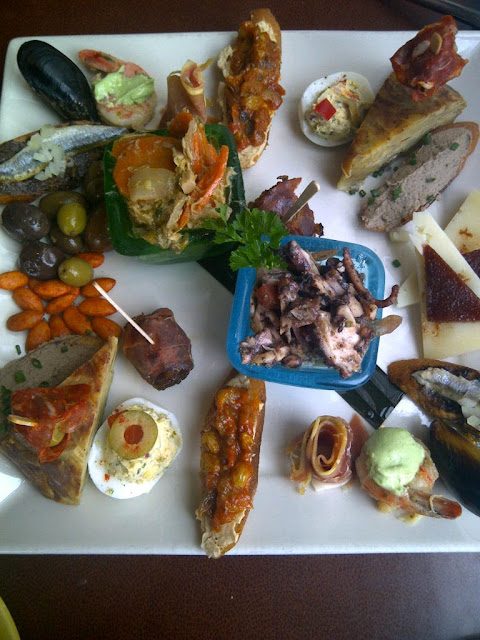
Tapas is a plural term, so your question should really be 'what are tapas'. There are a number of myths about what tapas is all about. Here are just a few:
well I could as usual blather all day but this tutorial should whet the appetite into a whirling dervish of needing theses little delectable nuggets of Mediterranean love....


What Tapas is Not

•Tapas is not a particular type of food. Anything can be tapas - paella, croquettes, ham and cheese on toast,a buggar, truly anything. As long as it is small and served with your drink (either free or at a surcharge), it is tapas. It doesn't even have to be Spanish - in Granada there are a number of Moroccan bars that offer cous cous, falafel and kebabs as tapas.


•Tapas is not a starter. If you start eating tapas, you finish eating tapas, and you don't stop until you're full., almost bursting at the pleasure seams and still wanting that last morsel everyone is eyeballing on the plate. It is a state of mind not a state of sanity. Well my sanity perhaps.....


•Tapas is not a collection of small dishes brought out on a platter and eaten as a main course. The Spanish have a word for this - 'tabla'. Sooooo Cascal stretches with their description of the sampler I ordered. Yet I was well aware of what they meant and was in no mind to school the cute Peruvian waiter or proper terms. Mama wanted her food. Yes he was Peruvian, we were chatting about the differences of Peruvian Ceviche VS typical California style.(by the way its corn that makes big difference )So anyhooo


The Meaning of the Word Tapas

A 'tapa' is a 'lid' or 'cover'. In the early days of tapas, a slice of cheese or ham was given with your drink and placed over your drink. All week I called my hat my Tapas, Boy Racer got tired of my personal twist on Tapas and was promptly told to "shut the f#$% up".

There is some debate over why exactly this was done:
Let me clarify. Not why I was told to "shut the F$%# up"that is clear but why the ham on the cocktail.....


•To keep out the flies.

•To hide the smell of the bad wine.

•To keep the wind from blowing your drink everywhere.

.

I prefer the first explanation - a piece of ham will only hide the smell of the wine until you take it off to take a drink, while if there was a strong wind, surely the first thing to go flying would be the tapas!

There is another explanation which differs from the above. It is said that there was once a sick king - which one exactly differs according to who is telling the story - who couldn't drink alcohol without taking some food with it. He issued a royal decree that insisted that everyone should take food with their drinks. A slight variation of this one is that the benevolent king simply insisted that food should be taken with any drink out of concerns for the health issues associated with drinking on an empty stomach. Mmmm me and King need the food or trouble. Me; lamp shade on head shirt off ,he probably just got a head ache.


Tapas in Spain Today

So, with all the myths about tapas out of the way, this is what tapas is today. A tapa is invariably a small dish of something edible. It may be a smaller version (normally a quarter version) of something else on the menu or it may be sold exclusively as tapas. The tapas may or may not be free( In USA not free). Unfortunately the days of free tapas are over in much of Spain. If the tapas is given to you without you having asked for it, it will be free.

If you are invited to "go for tapas", you'll be visiting lots of bars and probably only taking a single tapas in each. If you are unfamiliar with the city you are in, you may be apprehensive about moving on from a bar you have found that you like, for fear of not finding another one as good. In which case, I would suggest taking a Tapas Tour in Spain instead. Led by a local expert, you will be taken to a number of tapas bars, sampling a dish and a drink in.

So there you have a Readers Digest version of TAPAS 101.
Go forth and nibble the love done in miniature. There is a plethora of Tapas joints in the Bay Area yet sadly my backyard of Santa Cruz county has not arrived on the Tabla or Tapas. But have not fear we are in a baby Renaissance. yea never know when a bar crawl will involve little bites of Parma Ham, Boqurrones,octopus and olives.....a girl can dream.

Good night Moon...


A trip to Spain In Mountain View with a Moorish Flare

www.cascalrestaurant.com/about 400 Castro Street, Mountain View - (650) 940-9500


Tapas Tapas Tapas.
More to come.........
From Octapus to Olives there so much to talk about at this classic Spanish eatery in the heart of Mountain View
Sent via BlackBerry by AT&T

Monday, March 7, 2011

Domo Arigato Mister Roboto

Yamamori Sushi Scotts Valley Ca. Ill be back to talk about terms, traditions and yumminess...

Tai wrapped around Carrot ,Diakon, Yam, pickled Burdock, Cucumber, rice noodle, and Shiso leaf with a drop of Tobiko..... Back in a bit....
Sushi has for certain a special place in the hearts of Santa Cruzans and you cant swing a cat in this county with out hitting a Sushi joint. some are good some are not and some have folk lore that keeps the bar full. We have Korean influenced Sushi ,we have Cali style galore and even some hard core traditional in the heart of the Point(no silly not Pink Godzilla) lets just go over some terms to help you traverse some of the daunting menus so you get what you want and find what you need.
First .....DO NOT OPEN YOUR CHOP STICKS AND RUB THEM TOGETHER! Beyond disrespectful to the owner and Sushi chef. You are basically telling them that their joint is so cheap that they do not provide proper utensils. Its a big F You. I know some times we do get those cheap mass produced chop sticks that are less than perfect but rubbing them together isn't going to rid the splinters and the Ugly American behaviour is just not good. Respect is huge . We all want to receive it and as well project good will to those who provide a dining experience.

Size matters. In Japan Nigiri style sushi is the size of ones finger just enough for one bite. The piece should not be theses ginormous slabs o fish that takes two to three bites to get down. Silly Americans so concerned with quantity rather that quality. We also have a funny relationship with wasabi . creating a slurry of paste and Soy then dunking the poor fish till half the dish soaks into the rice masking any attempt at the delicate nuances raw fish can give. The wasabi is the GIRL FRIDAY to the experience. A tiny dab smeared on the piece and rare is it that soy is necessary. Alot if Sushi chefs will put a dab "under the skirt" to give you the proper ratio wasabi to fish for the best experience. The delicate flavours of the rice alone with the hint of sweetness and sour from the rice wine vinegar that gets paddled in when cooling from the cooker. You just miss so much when too much wasabi and soy are introduced. At the very least try without to create an opinion about your bite you might be very surprised what you might discover rather a hot ,salty ,textural roller coaster ride.

Cream Cheese has no place in the sushi repertoire. End of story. Fusion is Confusion and this is a perfect example. In Japan the is little or no dairy culture thus cream cheese needs to return to the bagel with a beautiful Gravlox.

Enjoy the terms and try a few out some time. The Chef will be tickled by your genuine interest in his/her culture.

Good eating my friends....


Domo. Thank you.


Domo arigato. Thank you very much.


Dozo. Please.


Gaijin. Outsiders, foreigners.


Gochiso-sama [deshita]. Traditional phrase closing a meal.


Hai. Yes.


Itadakimasu. Traditional phrase opening a meal.


Itamae. The sushi (or other Japanese) chef.


Konichiwa. A greeting, roughly `how are you'.


Omakase. Chef's choice.


Okonomi. The practice of ordering sushi a few pieces at a time.


Sabinuki. `No wasabi, please.'.

Saturday, March 5, 2011

ROUND ROUND THE WHEEL GOES

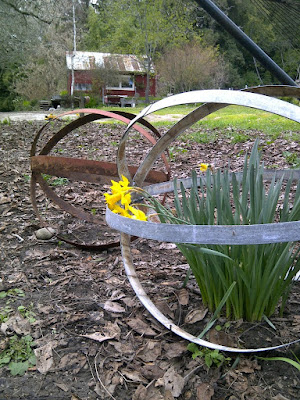
Lazy day at the Ghetto Vineyard. Found a great way to repurpose the rings from old cooperage. ahhh the sweet smell of recycle. Enjoy your Saturday perhaps fire up that fondue pot and pop a nice Kabinet. Besos
Sent via BlackBerry by AT&T

Thursday, March 3, 2011

LOOKY THERE ITS ME!!!

HERE I AM IN ALL MY PATTY PAN GLORY
Posted by Picasa

SAD . The chef left me a note

wow. I got a message from the chef Girl on the Vine and myself reviewed yesterday. Here is what he had to say VERBATIM:

"What the fuck??? Are you on crack? you smell something...oh yea, its the shit youve been talkin..must be your breathe(sic).Listen here you pig face...obviously youve blown a head gasket,you misguided misinformed wretch! I been spinnin(sic) swine since you were shittin yellow(ya know....like your fuckin spine) Anytime and I mean anytime you want to step out from behind your cyber cloak and show your pig face..I will show you exactly what I bring to the table and what you lack!And yes thats a fucking challenge! Ive been cooking for 35 years and just started referring to myself as a chef so why dont you drop down and suck it..because that is the only thing you will be tasting of mine. What a fucking joke no class,no skill,no balls. Hey is that why your back is turned on your headshot. fuckin coward..."  MASTER CHEF JAKE GANDOLFO

WOW .


OK LETS FIND A SOLUTION .....PIGGY TUMMY DONE RIGHT

So I ranted a bit and so did my partner in food crime(girl on the Vine). So now lets talk solutions and grow from mistakes rather than dwell. Good GOD Ive fucked up a thing or two in my 22 year career in the kitchen and only hope we all learn from mistakes and be better cooks for it. So here is a nice simple sexy recipe to fool proofing a PORK BELLY adventure. Dont fear the FAT embrace with balance and confidence. Perhaps some  APPROPRIATE stone fruit chutney to give it a bang WITH a ton of wine a ton of friends and a ton of good times. Dont forget we are all students at life. Its the collection of experiences and the lessons learned that makes us all who we are. good eating my friends ...Much love
4lb pork belly from your local butcher such as EL SALICHERO
2 tablespoons fennel seeds

sea salt

freshly ground black pepper

4 bulbs of fennel, cut into sixths, herby tops removed and reserved
1/4 C brown sugar.

a small bunch of thyme, leaves removed

5 cloves of garlic, unpeeled

olive oil

1 750 ml bottle of wine a good  white Burgundy would be lovely for pig and cook. Wink


Preheat the oven to its maximum temperature.


Using an extremely sharp knife, score the skin of the pork belly in deep vertical lines. Try to get them as close together as possible and as parallel as possible.


Crush the fennel seeds and 1 tablespoon of sea salt  and b sugar until you have a fine powder. Massage this powder into the skin.


In a roasting pan toss the fresh fennel, thyme, garlic, olive oil, and some salt and pepper. Place the pork belly (skin side up) on top.


Put the pan in the preheated oven. After 10 minutes turn the heat down to 325 degrees and roast the pork for a further hour.


After 1 hour at 325 degrees, remove the pan from the oven and drain off the fat and save for fryin up some taters.... Add the white wine and stir.


Put the pan back in the oven for another hour.


Remove the pan from the oven. Remove the fennel from the pan using a slotted spoon. Keep it warm.


Put the pork back into the oven for a further hour until the skin is golden and crisp. If the wine starts to evaporate during this time, add a splash more wine, or a splash of  stock.


Allow the pork to rest on a cutting board for 10 minutes.
You know you've done good if the skin is crispy,carmalized and practically winking at you, the belly itself should be spreadable not meat jello. Save those pan drippings reduce by a third add a pat of (my raw milk sweet cream cultured) butter for a heavenly sauce to drizzle over this piggy delight. Fry up some fingerlings in the pork fat reserve . Pop open a bottle of Kabinett(needs the acid to balance) and break into some crusty bread and a dollup of Stone fruit Chutney....ohhh Sweet Cheesus we have a party in our mouth.

That my friends and countrymen is how you do Pork Belly ........mama loves you


Wednesday, March 2, 2011

OK, girly on the vine!  My turn......the whisk is fired up!

Master of what is the real question?  Spin doctoring what a person does NOT know makes the expectant guests high expectations fall very hard and cold.  Today the term "Chef " gets tossed around like a rag doll in the spin cycle.  A term first and formost that is saved for the lifetime cook who has earned his credentials to be able to flow into the twilight of his/her career; yielding a clipboard not so much a knife.  TO COOK and BE A COOK is the honour few possess and, if and when one gets that honour, it's not ever used in vain.  It never is the label that makes the cook, but the skill, love and drive to feed his/her subjects. 

Go Big or Go Home

It is always a difficult decision to voice one’s opinion publicly when negative - especially in a small town, but I was so disappointed by the meal created by Chef Jake Gandolfi at Center Street Grill this past Sunday I feel compelled to share - and what better place to that than my best foodie friends' blog.....don't worry - she can take the heat!


Jake’s previous experience as a caterer came out on Sunday night. Most items appeared to have been prepped several hours prior to service and ultimately came out cold. There were several, complicated elements to most of the dishes which, I believe, contributed to the failure. Last, many items were not in season currently - Soup: Saffron Split Pea Puree topped w/ Melted Leeks and Pacific Prawn and a Prickly Pear Sorbet that had been enhanced with food coloring.

The ultimate low was the 3rd course – or Salad: Pickled Purple Cabbage and Golden Beets over Fried Corn Tortilla topped w/ Braised Pork Belly and Pomegranate Seeds. The tortilla was cold, greasy and could not be cut with a knife and fork. The Pork Belly had apparently not been braised long enough, and due to being served room temperature, it was gelatinous and lacked that ooey, gooey, spreadable quality the belly attains when carmelized in a sautee pan just moments before reaching the table.

In the end, he had that gregarious charm that wins you over, but I would suggest that Master Chef Jake spend a few nights behind the line and learn the artistry of serving food to order. We were only 40 people after all. Next dinner is scheduled for March 20th and they are shooting for 100 people....beware if you are one of them. 

Saturday, February 26, 2011

IMG-20110226-00163.jpg

Some times its not what we see but how we see it.

Sent via BlackBerry by AT&T

Friday, February 25, 2011

the cog keeps moving

Posted by Picasa

simple sensibiltiy

Posted by Picasa

locavores beware

Perhaps you consider yourself a foodie, devoted to the locavore movement or the latest exquisite, undiscovered restaurant. Or maybe you cringe at the mere mention of the word, avoiding your gastronomically obsessed friends who fixate over quinoa varietals and tri-weekly trips to the organic market. Wherever you fall in this culinary battle, The Moral Crusade Against Foodies in the March issue of The Atlantic is a provocative rant (in the guise of a book review). Author B.R. Myers targets the likes of Michael Pollan, Anthony Bourdain and Gabrielle Hamilton for their tendency to sensationalize the culinary arts by referring to food consumption as a religious experience. For Myers, foodies are making food unapproachable:


The moral logic in Pollan’s hugely successful book now informs all food writing: the refined palate rejects the taste of factory-farmed meat, of the corn-syrupy junk food that sickens the poor, of frozen fruits and vegetables transported wastefully across oceans—from which it follows that to serve one’s palate is to do right by small farmers, factory-abused cows, Earth itself. This affectation of piety does not keep foodies from vaunting their penchant for obscenely priced meals, for gorging themselves, even for dining on endangered animals—but only rarely is public attention drawn to the contradiction.


Myers’s point is that the media’s coverage of food remains an insiders’ game. From his perspective, eating isn’t worth the overblown attention it receives in some circles. What he doesn’t spend much space on, however, is why then the foodie audience has grown. Where do you land, readers?

Sunday, December 19, 2010

The treasures we seek usually lies under our feet...

We make the Golden Goose scram to get off the farm. We ask our best pal next door to help us woooo the hot chick. We trek through Costa Rica looking to find the self that belongs in Santa Cruz.
Why do we think life is a line ,drawing us to some far off horizon, but it usually isn't.I'd say it is a big circle and if I'm lucky,I'll find myself back where I started. Home again smarter than before.
Posted by Picasa

San Lorenzo Valley-20101218-00033.jpg

Picking Apple persimmons in the rain is like Mother Nature challenging me to the hanging ornaments on her trees. Girl is good at this challenge this weekend. 7 inches in 3 days....Time for another review. Where to go where to go.....Perhaps out to Davenport to watch the storm and eat.....perhaps.
Sent via BlackBerry by AT&T

Tuesday, December 14, 2010

good time review of fog bank and bennies I did same 11/28/10 hmm

By night it's billed as "Capitola's funnest bar and grille" with Thursday Karaoke, live bands on Fridays and Saturdays and Sunday Pro Jams. But when the morning sun filters through its front doors, the Esplanade's Fog Bank morphs into a family-friendly breakfast nook


From the beautifully crafted bar draped with fishing nets, came a Bloody Mary ($5.25), heartily flecked with black pepper and horseradish in a slender Collins glass, complete with a spiced green bean and pimiento-stuffed olive. The morning brew was served with class in pedestaled glass Irish Coffee cups.


Choose from omelettes and house specialties ($6.25 to $7.95) served with soft, lightly seasoned home fries or a bowl of fruit. A Breakfast Burrito, stuffed with eggs, cheese and mushrooms and slathered with sour cream, guacamole and fresh salsa is more than a meal, as is the Eggs Benedict.


I began my own quest for the second best Eggs Benedict after falling for them at the Banff Springs Hotel in Calgary, Alberta. This fascination, apparently hereditary, has led my son and I to seek the perfectly toasted English muffin topped with the smokiest slice of Canadian bacon, perfectly swirled poached eggs pouring out their canary yolk, and a blanket of buttery Hollandaise with a hint of bright lemony tartness.


But this morning I took one for the team, so to speak, out of respect for my pork-abhorring friends and ordered the Fog Bank's Vegetarian Benedict ($7.95). Two halves of an English muffin were topped with slices of warm tomato, quartered artichoke hearts and the most wonderful meaty sautéed mushrooms imaginable; more flavorful than any circle of lean bacon I had ever encountered. Poached eggs surrendered their sunny interiors and the glaze of Hollandaise was buttery indeed.


--------------------------------------------------------------------------------


Fog Bank, 211 Esplanade, Capitola, 462-1881. Full bar. Serving breakfast 9 a.m. to 1 p.m. weekends and 10 a.m. to 1 p.m. weekdays. Serving lunch until 4 p.m. daily. Visit the-fogbank.co

GOOD TIMES REVIEW
MINE 11/28/10 blog post
just interesting not bad or good just interesting.

Mushroom Surprise | Santa Cruz Good Times hmmmm sounds familiar

Mushroom Surprise Santa Cruz Good Times


Hmmmmmmmm. look back a few weeks 11/28/10 my blog .......I reviewed this joint and on the Eggs Bennies. Veggie bennie no less. Very interesting indeed. I didn't see the BEAUTIFUL Nets in the walls? Who gives a crap about dusty set decor? I want food info. Compare reviews lets see who gave viable info for the dining public. The other oddity or strange ass coincidence....a review of a joint in Scotts Valley. I did the new Thai place GT did Chef Leiu ...ok come the fuck on. MSG palace of simple Americanized Chinese fare. Sweet N sour hot pink ...and an array of other artery clogging goodness. Just call it what it is. Hell Mings in Soquel is the BEST Cheap hot good American style Chinese food spot with the perfect tacky decor to boot.War Won Ton brimming with fresh Carrots, bamboo shoot, sugar pea,water chestnuts, spring onion and big white won tons filled with pork and fat shrimp. OH Chef lieu gave me Three disks of Water chestnuts, unidentifiable chicken hunks and well over cooked won ton and A SHRIMP. yea they rock. the grease to solid food ratio with the egg rolls not worth mentioning. Chef Leiu is what it is nothing more. That review was bollocks. dollar for dollar Mings will give you what you crave, hang over cure, lazy Sun eve meal where you are sure to bump into a neighbor in the same state craving that hearty no pretense good grub that is always a deal. The Veggies vary as the seasons change and that makes me smile. sigh.... very interesting indeed GT.

Sunday, December 12, 2010

my pal

Posted by Picasa
Posted by Picasa

who burned the milk. or did the milk just get burned....


Today raw milk or cream is illegal unless aged 60 days in 22 states in the US,and European raw cheeses are legally required to be aged at least 60 days before being imported. The overwhelming majority of American milk has been pasteurized to the limits of taste and mutilation of this delicate elixir at temps as high as 171F..yea yea extends shelf life but creates these jacked up hydrogen sulfide gas, giving the milk a distinctive burnt flavour and lack of dimension the mighty white liquid is known for. I think about this alot during the winter months when I am feverishly hunched over pots of fall and winter fruits making my jams, conserves and chow chows all in wait for the "girls" to give birth in the spring and the milking season can commence. I am breaking the law every spring and summer producing my raw milk cheeses from local sheep and goats. Hold on Napoleon Dynamite is doing his dance routine........what that boy can do in a pair of moon boots.

ok I'm back. Soo back to me being the cheese 'dealer" small production under the laws and rules of basic safety and sanitation will produce an affair that will last your life time. I'm not even sure where I'm going with this today. I have a cold so I can't make jam and my head is spinning over the arcane methods we abide by in the USA over how our foods are produced. I guess enough Day Quil and my head begins to spin. So many people will never know or understand the joy of relishing food products in their cleanest form. Seasonal, local and simply made with love and care. We can't even get behind our children when sent to school and fed pure garbage and expect them to be able to produce academic achievements. I give I feel like shit. make some soup tonight snuggle up with someone you love two or four legs and enjoy this winter day. I'm gonna make some toast so a shot of nyquil and go off in a haze of glory. peace
Posted by Picasa

Friday, December 3, 2010

IMG00077-20101202-1151.jpg

Still life with Fuyus in an Earl Grey Syrup. I'm up to eyeballs in Gleaned fruit so give me a few days to think of a topic and wrangle all this fruit into jarred submission.... Cheers T

Sent via BlackBerry by AT&T